








“Whenever I see his photo on my phone, it breaks my heart,” said Popi Gogoi, a 38-year-old homemaker from Assam’s Jorhat district.
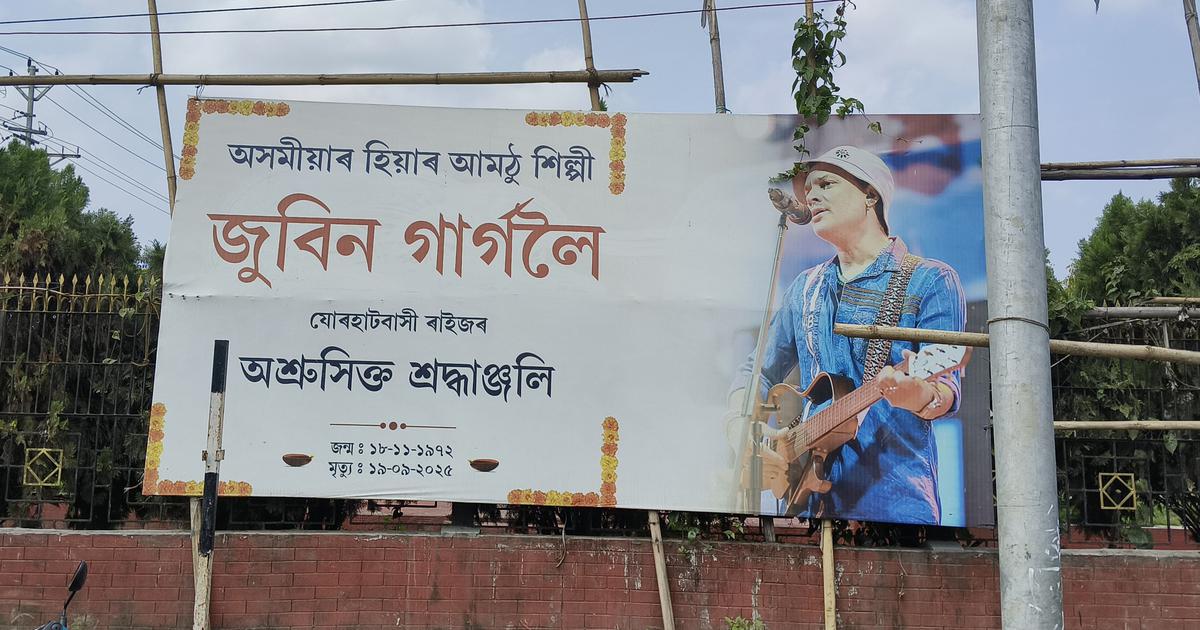
Gogoi was referring to Zubeen Garg, the beloved Assamese singer whose death by drowning in Singapore on September 19 plunged the state into mourning and led to massive protests.
The protests by young men and women were driven not just by grief. They also rippled with anger at the Himanta Biswa Sarma government, who was accused of shielding powerful people who had allegedly put Garg’s life at risk. The Congress, hoping to tap into this resentment, has made the singer’s death a poll issue and accused the Sarma government of a cover-up.
“As a woman, my heart bleeds for his wife,” Gogoi said.
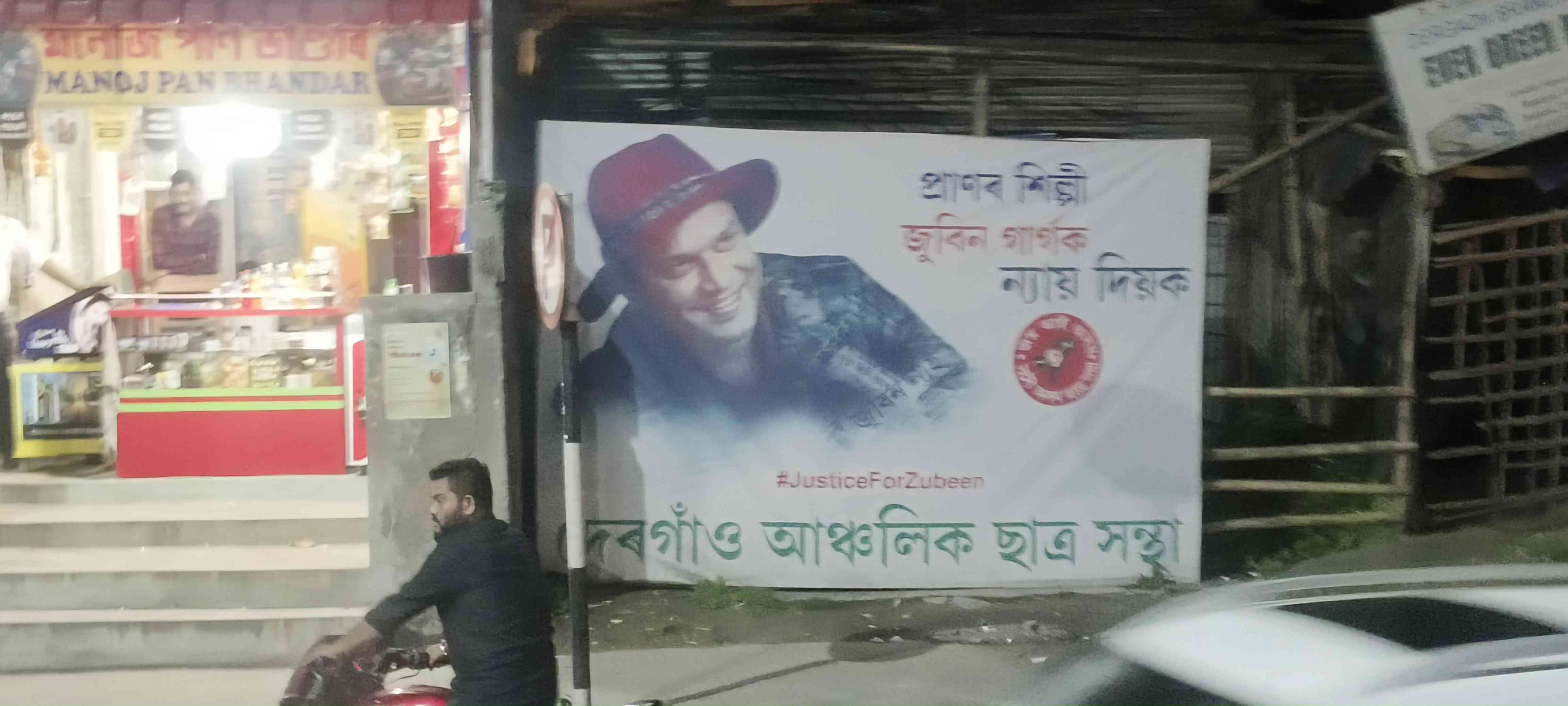
Travelling through Upper Assam, as the eastern districts of the state are called, Scroll found voters like Gogoi bringing up the death of Zubeen Garg – often on their own – and ruing the lack of closure to the allegations that he was murdered. In the towns of Upper Assam, signboards and posters calling for “Justice for Zubeen da” crop up in front of colleges and are pasted on cars and buses.
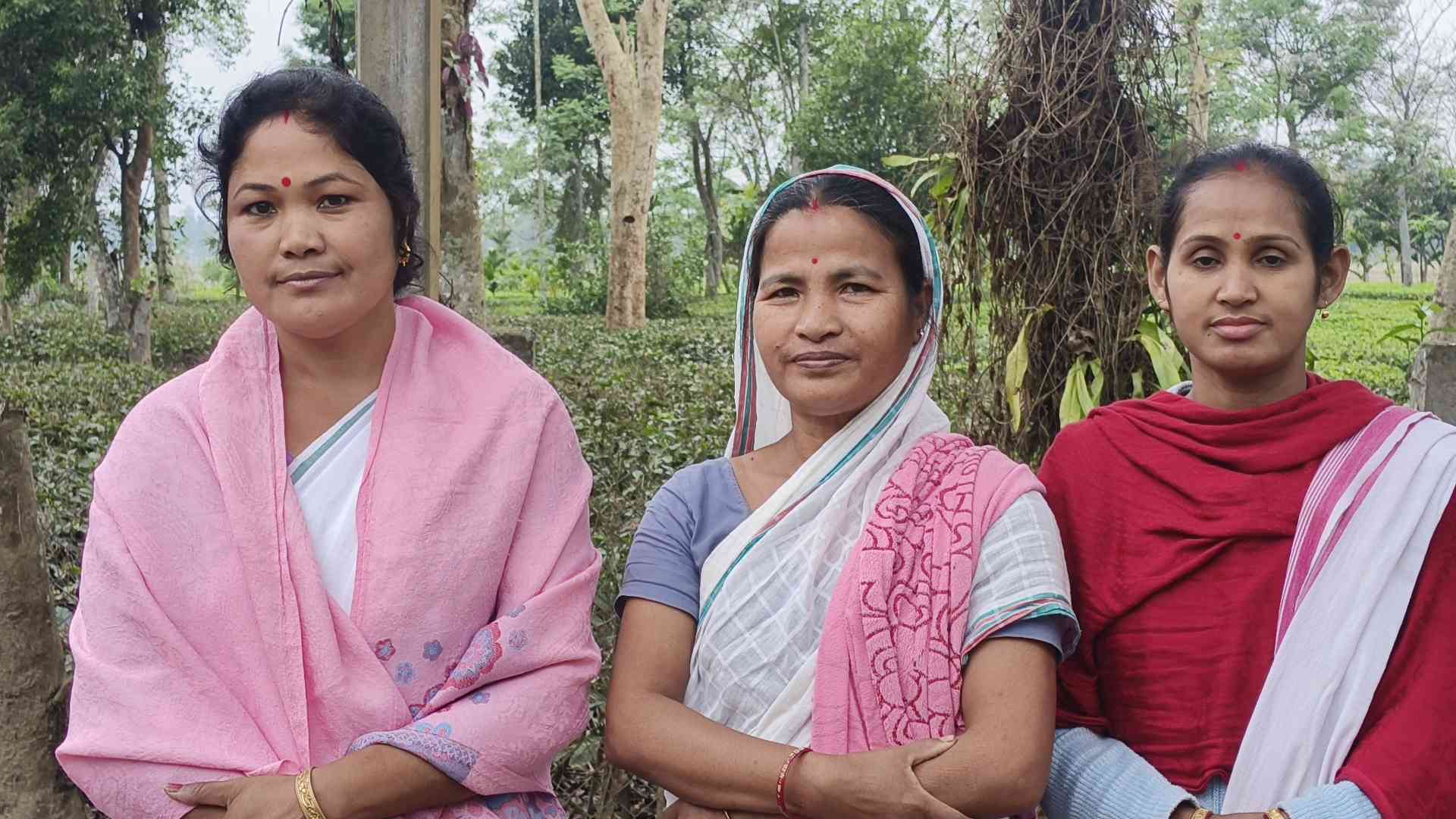
Gogoi, too, believes that the ruling Bharatiya Janata Party government ought to have delivered justice for the singer.
“It has been over six months. We want justice for Zubeen da,” Gogoi said, as she sat in the namghar or prayer hall at Nutunmati village. “If a person like Zubeen Garg struggles for justice, do you think an ordinary person like me will get justice if I die?”
But Gogoi’s disappointment is tempered with pragmatism. It will not influence her vote, which will go to the Bharatiya Janata Party, she said.
Gogoi, who belongs to the Ahom community, listed the host of women-centric beneficiary schemes run by the Himanta Sarma government to explain her decision.
Every month, the homemaker gets a cash transfer of Rs 1,250 under the Orunodoi scheme, as do 40 lakh other beneficiaries of the state. The BJP has promised to increase the payout to Rs 3,000 a month if voted back. Last year, Gogoi also received a one-time grant of Rs 10,000 under the Mukhya Mantri Udyamita Abhiyaan, which covers 28.5 lakh women in rural self-help groups.
“These schemes help poor women like us to run the house and allow poor students to continue studying,” Gogoi told Scroll. She also commended the government for improving the roads in her area and cutting down on corruption. “The unemployed youth got jobs without paying bribes,” she said.
Gogoi was not an exception. In Guwahati and across the districts of Sibsagar, Jorhat, Golaghat and Charaideo, Scroll found that the resentment against the BJP over Zubeen Garg’s death is unlikely to override the appeal of the party’s welfare schemes and its politics of polarisation.
Accident or murder?
In September last year, Garg travelled to Singapore to perform at a festival, and drowned while swimming near an island.
The Singapore police repeatedly ruled out foul play and last month a Singapore court upheld the police’s finding Garg had died in an “accidental drowning”.
But that has nothing to allay the deep suspicion among Assam’s residents that Garg’s death was the result of a conspiracy.
As protests shut down the state capital, Chief Minister Himanta Biswa Sarma declared that the police had filed a case of murder. The organiser of the festival, Shyamkanu Mahanta, and six others were arrested.
But that led to suspicions of a cover-up, as Mahanta was alleged to be close to the chief minister. “Nobody in Assam believes that the Himanta Biswa Sarma will reveal the truth behind what actually happened to Zubeen,” Gaurav Gogoi, the Assam Congress chief, told Scroll. “More than six months have passed and we are nowhere close to knowing what actually happened. The people who are in the prison are currently close to the BJP ecosystem and one of them is close to Himanta Biswa Sarma himself. People do not trust this government and how the investigation is taking place.”
An unfinished memorial
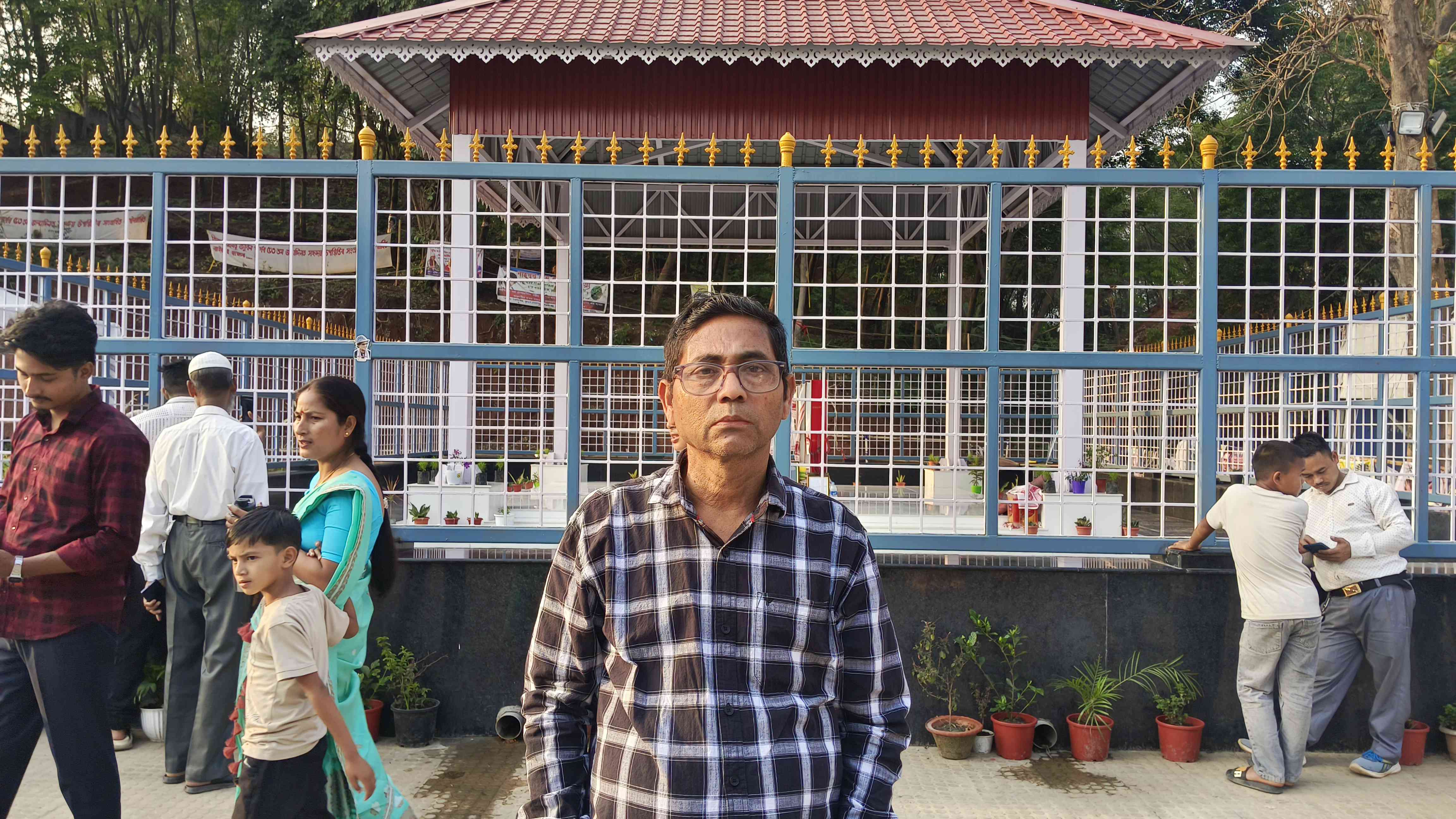
Six months after his death, hundreds of Zubeen admirers from across the state, continue to throng Kamarkuchi, a site on the outskirts of Guwahati where Garg’s body was cremated and which the government has promised to turn into a cultural landmark.
Many of them are left disappointed at the state of the memorial, where even a boundary wall has not come up.
“We want him to get respect, but somehow the chief minister is not taking it seriously,” said a 40-year-old government employee, who came with his family to visit the shrine to Zubeen. “The pathetic condition of the memorial is testimony to that. The CM has not even visited this place after his death.”
He said there was resentment about the government’s handling of Zubeen’s case but people are too afraid to speak out. “Also, there is no alternative to the BJP.”
Pranab Talukdar, a 58-year-old businessman from Bajali in Western Assam and a BJP supporter, differed. “The memorial should have been built by now. But it has nothing to do with the election,” he said.
He added: “Maybe some diehard fans are angry. But people will eventually vote for the BJP as it is a Hindu party.”
Biswajit Saud, a 30-year-old cab driver in Guwahati, said the uproar and anger over Zubeen’s death has died down. “Whoever spoke out about Zubeen was sent to jail,” Saud said, referring to a spate of arrests and detentions of his fans soon after his death.
Saud, who hails from Chaygaon, a town in the Kamrup district, added: “The main game for the BJP in Assam is Hindu-Muslim politics. They have used it to divert attention from the Zubeen issue.”
Unhappiness, not anger
In Upper Assam, Scroll found that the majority of voters were unwilling to blame the BJP even if they were unhappy at the government’s handling of the case.
Trilochan Baruah, a 19-year-old student of a college in Jorhat, where Zubeen had studied, was the exception. “Justice should have been done earlier,” he said. “The BJP is reluctant to do anything even after so many months. Why should we vote for it?”
“People like us are forced to think twice about voting for the BJP because of Zubeen,” said 32-year-old Monalisha Bania, a homemaker from Teok town in Jorhat district.
The 25-year-old received Rs 10,000 under the Mukhya Mantri Udyamita Abhiyaan last year. “We don't blame Himanta Biswa Sarma directly. But, we would have been happier if he would have found some time to solve this and give justice.”
Mintu Gogoi, a 50-year-old pharmacist in Jorhat’s Teok constituency, questioned why the Himanta Sarma government took it upon itself to promise justice. “Only courts can do that. They should not have said that. Now they are neglecting the matter.”
He praised the BJP government for infrastructure development and “corruption free jobs” and said that voters are unlikely to ditch the party despite their unhappiness over Zubeen’s death.
“The government for sure has neglected Zubeen Garg’s death and inquiry,” Mridumani Hazarika Bora, the 43-year-old owner of a stationery shop in Jorhat town, told Scroll. “But it has worked for development, built flyovers and roads and empowered women.”
Seeking justice, Bora said, is a separate matter from voting. “My vote won't change.”

All photographs by Rokibuz Zaman.
